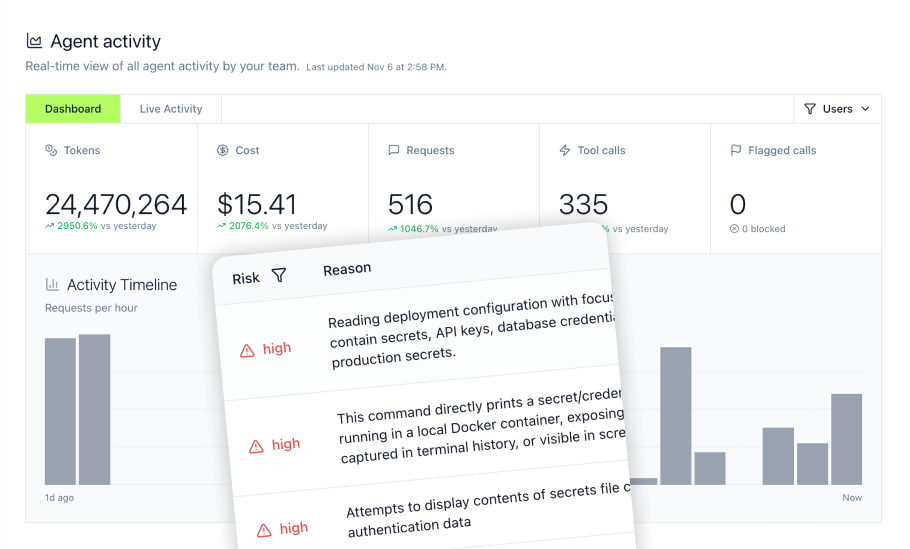
Self-hosted MCP gateways have become essential infrastructure for organizations requiring complete control over their AI tool deployments. While managed services like MintMCP's MCP Gateway offer rapid deployment with enterprise-grade security, some organizations prefer self-hosting to satisfy internal security posture, procurement constraints, or infrastructure control requirements.
Model Context Protocol enables AI agents to securely access tools, databases, and APIs. The challenge: most MCP servers are STDIO-based, lack authentication, and scatter credentials across developer machines. Self-hosted gateways solve these problems while keeping data within organizational boundaries, which can help organizations support governance needs under the EU AI Act as its staged applicability dates continue through 2026 and into 2027.
This guide evaluates 10+ MCP gateway solutions for 2026, including both managed and self-hosted options, based on deployment complexity, performance benchmarks, security architecture, and enterprise readiness.
Key Takeaways
- MintMCP Gateway provides a managed SaaS-first path to production with SSO and SCIM-driven RBAC, tool-level policy, audit logs, and enterprise MCP gateway capabilities that reduce manual configuration
- Docker MCP Gateway delivers container-native simplicity with signed container images for supply chain security, making it a fit for teams already using Docker
- Bifrost is performance-focused, while many production teams prioritize governance, access control, and auditability over microsecond-level gateway overhead differences
- Security-first options address AI-specific threats including prompt injection, command injection, and PII exposure through pluggable guardrails
- Self-hosted and managed options serve different operating models: self-hosting increases infrastructure control, while managed SaaS-first platforms reduce connector runtime, scaling, and maintenance overhead
1. MintMCP Gateway: Enterprise MCP Infrastructure in Minutes
MintMCP Gateway transforms local and hosted MCP servers into production-ready services with OAuth protection, SSO, SCIM-driven RBAC, tool-level policy, credential management, and centralized observability. As a Cursor Hooks Partners Program listing, MintMCP addresses the core barrier to MCP adoption: the gap between developer experimentation and production deployment.
What Makes MintMCP Different
MintMCP brokers OAuth for stdio and hosted MCP servers and wraps them with SSO authentication, SCIM-driven RBAC, tool-level allowlisting, rule-based policy, audit logging, and real-time monitoring. Virtual MCP Bundles give teams per-use-case endpoints with SCIM-driven membership, while Agent Bundles provide per-agent identity with M2M auth and an “act as agent” flow. SOC 2 Type II audited security and comprehensive audit logging help organizations meet stringent internal review requirements.
Core Capabilities
- OAuth brokering for stdio and hosted MCP servers with SSO protection
- SOC 2 Type II audited security program
- Gateway + Agent Monitor governance for MCP traffic and local agent activity across Claude, Cursor, ChatGPT, Gemini, and Copilot
- Granular tool access control by role, SCIM group, Virtual MCP Bundle, and rule-based policy
- Credential management for governed access to downstream tools
- Hosted MCP connectors run by MintMCP for Snowflake, Elasticsearch, Gmail, and other enterprise systems
- JavaScript Gateway Middleware for inline policy, DLP, and guardrails integrations
Where MintMCP Fits Best
Organizations requiring rapid enterprise deployment with compliance from day one. Teams that want to avoid the infrastructure complexity and maintenance burden of self-hosted solutions while maintaining enterprise-grade security controls.
2. Docker MCP Gateway
Docker MCP Gateway delivers accessible deployment for teams already running containerized infrastructure. For organizations that want similar guardrails without operating the gateway and tool fleet themselves, managed platforms like MintMCP focus on enterprise governance (SSO/OAuth, audit trails, and monitoring) with minimal ops overhead.
Where Docker Gateway Fits Best
Teams with existing Docker infrastructure wanting minimal deployment friction and container-native security controls.
Core Capabilities
- Container isolation: Each MCP server runs in its own container with configurable resource limits
- Signed images: Supply chain security with verified container images prevents tampering
- Docker Desktop integration: Native GUI management through MCP Toolkit
- Multi-transport support: STDIO, SSE, and Streamable HTTP transports
Self-Hosting Specifics
Deployment Complexity: Simple
License: Open-source (MIT)
Prerequisites: Docker Engine or Docker Desktop
Installation: Docker Compose or Kubernetes manifests
Latency: Varies by deployment and interceptor/policy configuration (benchmark in your environment)
Client Compatibility: Works with Claude, Cursor, and Copilot
3. Obot
Obot provides platform capabilities that combine gateway, catalog, chat client, and agent orchestration in a Kubernetes-native deployment.
Where Obot Fits Best
Large enterprises wanting a complete self-contained AI infrastructure platform with advanced agent orchestration capabilities.
Core Capabilities
- Gateway, Catalog, and Chat: Single deployment for complete MCP infrastructure
- Nanobot framework: Advanced agent orchestration for building custom AI workflows
- Multiple identity providers: Google, GitHub, Okta (Enterprise), Microsoft Entra (Enterprise)
- Active development: Regular releases with ongoing feature additions
Self-Hosting Specifics
Deployment Complexity: Medium (requires Kubernetes expertise)
License: Open-source with Enterprise Edition available
Prerequisites: Kubernetes cluster
Installation: Helm charts and Kubernetes manifests
Enterprise Features: SSO, advanced RBAC, audit logging
4. Bifrost by Maxim AI
Bifrost is performance-focused, with the project reporting very low gateway overhead in its own benchmarking and documentation. Built in Go, it’s designed to be quick to stand up in common environments (local, Docker, or Kubernetes).
Where Bifrost Fits Best
Real-time applications and high-throughput workloads where latency directly impacts user experience.
Core Capabilities
- Low-latency gateway overhead: Bifrost reports about 11µs overhead in its published benchmark context
- Dual capability: Functions as both AI Gateway (LLM routing) AND MCP Gateway (tool orchestration)
- Multi-provider support: OpenAI, Anthropic, AWS Bedrock, Google Vertex, and other providers
- Zero-configuration startup: NPX, Docker, or Kubernetes via Helm charts
Self-Hosting Specifics
Deployment Complexity: Easy
License: Apache 2.0
Prerequisites: None (NPX) or Docker/Kubernetes
Installation: npx -y @maximhq/bifrost or Docker image
Enterprise Edition: SSO, HashiCorp Vault integration, custom plugins
5. MCPJungle
MCPJungle offers balanced simplicity and enterprise features for teams wanting a single registry and gateway package. With active community development and regular releases, it represents mature open-source infrastructure.
Where MCPJungle Fits Best
Teams wanting lightweight deployment with enterprise-grade features and minimal infrastructure dependencies.
Core Capabilities
- Tool Groups: Create curated tool subsets per team or use case
- Enterprise mode: Built-in RBAC, access control, OpenTelemetry metrics
- Multi-transport: STDIO and Streamable HTTP support
- Lightweight footprint: Single binary or Docker Compose deployment
Self-Hosting Specifics
Deployment Complexity: Easy
License: MPL-2.0
Prerequisites: None (single binary) or Docker
Installation: Download binary or docker-compose up
Database: SQLite (default) or PostgreSQL (production)
MCPJungle provides a registry where developers register MCP servers and their tools, simplifying architecture when managing many MCP servers. Understanding how MCP gateways bridge AI infrastructure helps teams evaluate fit.
6. Lasso Security MCP Gateway
Lasso Security provides pluggable security scanning designed for AI threat vectors. The plugin-based architecture addresses prompt injection, command injection, and PII exposure.
Where Lasso Security Fits Best
Regulated industries requiring real-time threat detection and application-level security scanning before tool execution.
Core Capabilities
- Modular guardrails: Basic (token masking), Presidio (PII detection), Lasso (comprehensive threats)
- Security scanner: Analyzes MCP server reputation before loading
- Real-time detection: Prompt injection and command injection blocking
- Tracing integration: xetrack plugin for DuckDB/SQLite logging
Self-Hosting Specifics
Deployment Complexity: Easy
License: MIT
Prerequisites: Python 3.8+
Installation: pip install mcp-gateway or Docker
Latency: Varies by scanning configuration and workload; benchmark in your environment
The latency trade-off reflects comprehensive security scanning. For organizations where tool governance matters more than raw speed, Lasso delivers protection that performance-optimized gateways may not prioritize.
7. Lunar.dev MCPX
Lunar MCPX provides tool-level access control, not just server-level access, enabling precise governance over which agents can invoke specific tools. The platform balances performance with governance capabilities.
Where Lunar.dev Fits Best
Organizations requiring fine-grained permission management and tool-level RBAC configurations.
Core Capabilities
- Granular RBAC: Configure access at the individual tool level
- Tool customization: Override tool definitions and insert approval flows
- Unified observability: Integration with Lunar AI Gateway for combined LLM and MCP monitoring
- Prometheus metrics: Labels for tool name, agent, and error status
Self-Hosting Specifics
Deployment Complexity: Medium
License: Open-source with Enterprise Edition
Prerequisites: Docker
Authentication: API keys, OAuth support
Performance: Varies by deployment, workload, and policy configuration; benchmark in your environment
Lunar MCPX addresses scenarios where different teams need access to the same MCP servers but different tool subsets. This aligns with enterprise requirements for authentication and identity across AI infrastructure.
8. IBM ContextForge
ContextForge enables multiple gateway instances to auto-discover and share tool registries across regions, supporting federation for distributed enterprise deployments. This is a community project in the IBM ecosystem, not an official IBM product.
Where ContextForge Fits Best
Global enterprises with multi-region requirements and teams needing consistent tool availability across geographic boundaries.
Core Capabilities
- Federation architecture: Gateway instances automatically share tool registries
- Protocol bridging: Wrap REST/gRPC APIs as virtual MCP endpoints
- Multi-transport: HTTP, SSE, and STDIO support
- Redis backend: Distributed caching and federation coordination
Self-Hosting Specifics
Deployment Complexity: Complex
License: Apache 2.0
Prerequisites: Kubernetes, Redis
Installation: Multi-cluster Kubernetes deployment
Latency: Varies by federation topology and infrastructure
9. Portkey MCP Gateway
Portkey offers infrastructure for GenAI teams that need both LLM routing and MCP tool orchestration. The unified control plane manages model and tool governance across flexible deployment models.
Where Portkey Fits Best
Organizations wanting flexible deployment options and broad LLM compatibility.
Core Capabilities
- Unified control plane: Single platform for model and tool governance
- Advanced IdP integration: Okta, Entra, custom providers
- Multiple auth methods: OAuth 2.1, API tokens, header auth, JWT validation
- End-to-end traces: Observability spanning both LLM and MCP calls
Self-Hosting Specifics
Deployment Complexity: Medium
License: Open-source with managed options
Compliance: SOC 2 Type II audited, with GDPR-oriented controls
Deployment Options: SaaS, private cloud, VPC, or fully self-hosted
Framework Support: LangChain, CrewAI, agent frameworks
10. TrueFoundry MCP Gateway
TrueFoundry provides a comprehensive AI platform with MCP gateway capabilities and enterprise deployment options. The platform supports air-gapped environments for organizations with strict data isolation requirements.
Where TrueFoundry Fits Best
Enterprises wanting unified AI infrastructure with compliance-oriented controls and organizations requiring air-gapped deployment capabilities.
Core Capabilities
- Virtual MCP abstraction: Solves the N×M integration problem
- OAuth 2.0 injection: On-Behalf-Of (OBO) authentication
- Unified platform: LLM serving, MCP gateway, and MLOps in one deployment
- Cost optimization: Can support routing and infrastructure consolidation, depending on workload and deployment model
Self-Hosting Specifics
Deployment Complexity: Medium
License: Proprietary with free tier
Compliance: SOC 2 Type II audited, with healthcare documentation available for qualifying deployments
Prerequisites: Kubernetes
Installation: Managed SaaS, on-premise, or air-gapped
Performance: Published low-latency and throughput claims depend on deployment context; benchmark with your own workload
11. Pangolin Gateway
Pangolin Gateway provides an open-source security blueprint with components including Traefik, WireGuard, OAuth, and CrowdSec for layered protection.
Where Pangolin Fits Best
Security teams wanting maximum control over every infrastructure component with component-based architecture.
Core Capabilities
- Zero-trust networking: WireGuard tunnels isolate backend servers from public networks
- Multi-layer security: Traefik WAF, CrowdSec IDS, OAuth2 authentication
- Threat model mapping: Supports structured security analysis for MCP deployments
- Component-based: Pangolin stack, Middleware Manager, MCPAuth, CrowdSec
Self-Hosting Specifics
Deployment Complexity: Complex
License: 100% free (all components open-source)
Prerequisites: Ubuntu VPS with Docker
Installation: Component assembly with guided setup
Security Controls: Identity access control, network segmentation, DDoS protection
Pangolin represents architecture-level security rather than application-level scanning. Organizations assemble proven components, including Traefik for ingress, WireGuard for tunneling, and CrowdSec for threat detection, into cohesive self-hosted MCP infrastructure.
Deploy Enterprise MCP Infrastructure with Confidence
The Model Context Protocol has fundamentally changed how enterprises connect AI assistants to their data and tools. But as this analysis demonstrates, deploying MCP at scale requires more than just protocol support. It demands enterprise-grade security, governance, and monitoring that transforms experimental AI into production-ready infrastructure.
MintMCP Gateway provides a managed SaaS-first path from pilot to production, offering deployment workflows that reduce the manual configuration required for enterprise MCP governance. With SOC 2 Type II audited security, pre-built connectors for enterprise data sources, and a Cursor Hooks Partners Program listing, MintMCP removes the technical barriers that keep organizations stuck in AI pilot purgatory.
Whether you're securing access to Snowflake warehouses, Elasticsearch knowledge bases, or custom enterprise tools, MintMCP provides the infrastructure that makes AI deployment practical, auditable, and secure.
For a deeper understanding of MCP gateway architecture, see the guide to understanding MCP gateways.
Ready to transform your AI infrastructure? Visit mintmcp.com to schedule a demo and see how MintMCP Gateway can accelerate your enterprise AI deployment.
Frequently Asked Questions
What are the primary benefits of self-hosted MCP gateways?
Self-hosted gateways keep traffic, execution, and credential handling inside your own infrastructure boundary, which is useful for organizations with strict internal controls or third-party processing constraints. This approach can reduce external data processing concerns and enables customization of authentication flows, security policies, and performance tuning that managed services may not support.
How do MCP gateways support SOC 2 and GDPR-oriented governance?
Self-hosted gateways can support compliance programs by keeping data within controlled infrastructure. Complete audit trails, tracking every tool call, authentication event, and data access, support compliance reporting requirements. Organizations inherit their existing infrastructure compliance posture when deploying self-hosted options.
What technical expertise is required for self-hosted deployment?
Requirements vary significantly by platform. Docker MCP Gateway needs only basic Docker knowledge. Bifrost and MCPJungle support simple NPX or binary deployments. Enterprise platforms like Obot and TrueFoundry require Kubernetes expertise. Complex architectures like IBM ContextForge (federation) and Pangolin (component assembly) need infrastructure engineering experience. Plan for ongoing maintenance: security patches, version upgrades, and monitoring configuration.
Can MCP gateways integrate with enterprise data sources?
Yes. MCP gateways connect AI agents to any tool with an MCP server implementation. For data warehouses like Snowflake and search engines like Elasticsearch, you deploy the corresponding MCP server behind your gateway. The gateway handles authentication, access control, and audit logging while the MCP server translates natural language queries into native database operations.
How do MCP gateways address shadow AI risks?
Shadow AI, unauthorized AI tool usage, presents growing governance challenges across enterprises. MCP gateways provide centralized governance: all AI tool access routes through a single control point with authentication, audit logging, and policy enforcement. This transforms decentralized, unmonitored AI usage into sanctioned, governed deployments, turning visibility gaps into complete audit trails without disrupting developer workflows.