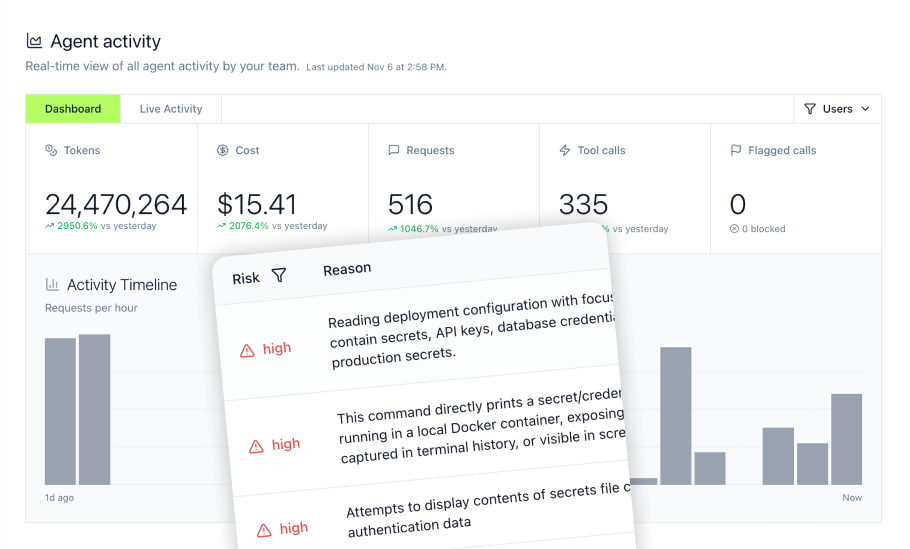
Business intelligence teams face an infrastructure paradox: AI agents promise unprecedented analytics capabilities, but connecting them to data warehouses, analytics platforms, and internal tools creates significant security and governance challenges. MCP (Model Context Protocol) gateways solve this by providing centralized authentication, audit trails, and data access controls, transforming AI-powered BI from risky experiment to production-ready capability.
For BI teams, MCP can make analytics workflows more conversational by letting approved AI tools interact with governed data sources, dashboards, and internal systems through controlled tool calls.
This guide evaluates 10 MCP gateways specifically for BI team requirements: data warehouse connectors, compliance posture, analytics observability, and deployment speed.
Key Takeaways
- MCP gateways address a critical gap: 86% of enterprises require tech stack upgrades to deploy AI agents effectively, with 42% needing 8+ connections for their analytics workflows.
- Compliance is non-negotiable: 62% of enterprise leaders cite compliance concerns as their top challenge when deploying AI tools, making SOC 2 Type II audited platforms important for BI teams handling sensitive data.
- Performance varies by optimization approach: Some gateways optimize for low-latency overhead, while others trade latency for federation capabilities, policy depth, or security scanning. For BI teams, the right choice depends on whether workflows prioritize interactive dashboards, governed access, or complex enterprise routing.
- BI-specific connectors matter: Pre-built integrations for Snowflake, Elasticsearch, and data warehouses differentiate enterprise-ready gateways from developer-focused alternatives.
- Open-source and self-hosted options exist: Teams requiring infrastructure control can evaluate Bifrost, Docker, Lasso Security, and IBM ContextForge alongside managed platforms.
1. MintMCP Gateway: SOC 2 Type II Audited with Native BI Connectors
MintMCP Gateway is built for BI teams that need enterprise-grade security, governed data access, and rapid deployment. As a SOC 2 Type II audited MCP gateway platform, MintMCP directly addresses the 62% of practitioners citing security as their top deployment challenge.
What Sets MintMCP Apart
MintMCP's hosted MCP connectors reduce the integration work required to bring BI data sources into governed AI workflows. The Snowflake MCP Server enables natural language queries against data warehouses, supporting workflows such as SQL generation and semantic data access. The Elasticsearch connector powers AI-driven knowledge base search across historical support tickets, log analysis, and documentation.
Key Capabilities for BI Teams
- Hosted MCP connector deployment: Run MCP servers without local infrastructure
- SSO and SCIM-driven RBAC: Use enterprise identity groups to control access
- OAuth brokering for stdio and hosted MCP servers: Centralize authentication across varied MCP deployment patterns
- Virtual MCP Bundles: Per-use-case endpoints with SCIM-driven membership and curated tool access
- Tool-level allowlisting and rule-based policy: Expose only approved BI tools and actions
- Credential management: Reduce credential sprawl across analytics workflows
- Complete audit trails: Centralized logging to support SOC 2 evidence and GDPR-aligned governance
- Centralized observability: Usage monitoring for tool calls, access patterns, and security review
BI Use Cases
- Product teams: Enable AI-powered analytics from Snowflake data warehouses with natural language queries
- Finance teams: Automate reporting and variance analysis with governed data access
- Executive teams: Generate real-time BI dashboards without SQL expertise
Deployment Fit
MintMCP is designed for IT, Security, and AI Operations teams that need governed MCP access for internal employees and internal agents. It is a strong fit for mid-market and enterprise teams that want managed SaaS-first deployment, hosted MCP connectors, SSO, SCIM-driven RBAC, tool-level policy, credential management, and centralized audit trails without operating connector runtimes themselves.
- Deployment: Managed SaaS-first, US and EU, with VPC/self-hosted on request
- Compliance: SOC 2 Type II audited, compliant with HIPAA standards, supports GDPR-aligned governance
- Pricing: Enterprise plans via sales
- Learn More: mintmcp.com/mcp-gateway
2. TrueFoundry MCP Gateway
TrueFoundry provides AI infrastructure for teams that want to manage LLMs, MCP servers, and observability through a shared control plane. For BI teams, the strongest fit is latency-sensitive analytics infrastructure where platform engineering teams already manage AI infrastructure centrally.
Where TrueFoundry Fits Best
TrueFoundry is positioned for teams that need hybrid deployment options and infrastructure-level control. BI teams should benchmark latency, throughput, and policy behavior against their own analytics workloads rather than relying on a single published performance number.
Core Capabilities
- Unified LLM + MCP control plane: Single interface for AI infrastructure
- OAuth 2.0 identity injection: On-Behalf-Of authentication with token exchange
- Hybrid deployment: Supports managed SaaS and self-hosted control plane patterns
- Enterprise governance: Supports regulated AI infrastructure requirements
Tradeoffs to consider
TrueFoundry can fit platform engineering teams that want broader AI infrastructure management, but BI teams should evaluate whether it provides the same MCP-specific governance primitives they need for day-to-day analytics access, including per-use-case Virtual MCP Bundles, SCIM-driven RBAC, hosted BI connectors, and tool-update policy. MintMCP is more directly positioned around internal employee and internal-agent governance for IT, Security, and AI Operations teams.
- Deployment: Hybrid managed SaaS and self-hosted control plane
- Latency: Benchmark in your environment
3. Portkey MCP Gateway
Portkey brings AI gateway infrastructure experience to MCP deployments. For BI teams, the key question is less "token volume" and more whether the gateway provides auditable access controls, least-privilege tooling, and first-class warehouse/BI connectors.
Where Portkey Fits Best
Portkey's infrastructure is suited to teams that want a managed SaaS option, open-source AI gateway, or self-hosted/hybrid enterprise deployment. The platform can help centralize authentication patterns and observability across AI infrastructure.
BI-Relevant Capabilities
- Unified MCP + LLM observability: Correlate MCP calls with LLM activity for cost allocation
- Central MCP registry: Inventory servers with usage tracking
- Guardrails: Policy enforcement for data access
- Open-source gateway option: More flexibility for teams that want infrastructure control
Tradeoffs to consider
Portkey is strong for developer and platform engineering teams that want broad AI gateway infrastructure. BI teams led by IT, Security, or AI Operations should compare its MCP governance model against MintMCP's data-permissions-first approach, including SCIM-driven Virtual MCP Bundles, tool-level allowlisting, credential management, hosted MCP connectors, and Agent Bundles for internal-agent identity.
- Deployment: Managed SaaS with open-source and self-hosted options
- Pricing: Multiple tiers including enterprise
4. Bifrost by Maxim AI
Bifrost focuses on low-latency AI gateway infrastructure for teams prioritizing speed and self-hosted control. Teams operating in regulated BI environments should weigh raw latency against governance depth, auditability, and pre-built warehouse/BI connectors.
Performance Focus
- Low-latency gateway design for high-volume AI workloads
- Efficient resource usage for teams operating their own infrastructure
- High-throughput routing for platform-managed AI traffic
- Open-source deployment model for teams that want code-level transparency
Open-Source Advantages
Released under Apache 2.0 license, Bifrost offers transparency for security-conscious BI teams. The platform can suit teams that want to embed gateway capabilities into broader AI infrastructure rather than use a managed MCP governance platform.
Where Bifrost Fits Best
BI teams processing high volumes of data requests where gateway overhead directly affects responsiveness. Teams should separately evaluate MCP-specific governance depth, connector coverage, audit workflows, and managed deployment requirements.
Tradeoffs to consider
Bifrost's self-hosted-first approach gives platform teams control, but it can require more customer-owned infrastructure, runtime operations, and governance assembly. MintMCP addresses that gap with managed SaaS-first deployment, hosted MCP connectors, SSO and SCIM-driven RBAC, Virtual MCP Bundles, audit logs, and credential management.
- Deployment: Self-hosted Apache 2.0 or Enterprise edition
- Latency: Benchmark gateway overhead separately from end-to-end BI query latency
5. Lunar.dev MCPX
Lunar.dev MCPX provides governance controls for teams managing access to sensitive analytics data. Its MCP evaluation sandbox helps teams test MCP servers before exposing production data.
Governance Capabilities
Lunar.dev offers RBAC spanning global, service, and tool-level permissions, which can help BI teams with complex data access hierarchies. Tool customization can support compliance review by controlling tool descriptions and parameters.
Core Features
- MCP evaluation sandbox: Test servers before production deployment
- Granular RBAC: Global, service, and tool-level access controls
- Prometheus metrics: Observability for tool calls
- DLP safeguards: Controls vary by deployment and configuration
Performance
Lunar.dev balances governance controls with responsiveness for BI workflows, but teams should validate p95 and p99 impact under their expected BI traffic.
Tradeoffs to consider
Lunar.dev can fit teams that prioritize testing and security controls around MCP servers. BI teams should also evaluate whether it supports the broader operating model MintMCP provides, including hosted MCP connectors, SCIM-driven Virtual MCP Bundles, Agent Bundles, credential management, and Gateway + Agent Monitor two-layer governance.
- Deployment: Managed SaaS
- Pricing: Free tier available, enterprise pricing on request
6. Kong AI Gateway
Kong AI Gateway helps teams expose and govern AI traffic through an API gateway model. It can be suitable for BI teams already standardized on Kong for API management and looking to bring existing analytics APIs into MCP-style workflows.
Integration Advantages
Organizations with existing analytics APIs can use Kong's API management infrastructure to centralize traffic and policy patterns. This approach is most relevant when BI teams already manage many internal APIs through Kong.
Enterprise Features
- API + MCP management: Single platform for API and AI gateway workflows
- Policy enforcement: Apply gateway-level policy to AI and API traffic
- Security integrations: Works within Kong's broader API gateway ecosystem
Considerations
Kong is best suited for organizations already invested in Kong infrastructure. BI teams should evaluate pricing, MCP-specific primitives, and whether they need per-use-case Virtual MCP Bundles, Agent Bundles, hosted connector runtime, or stdio/hosted-server OAuth brokering.
- Deployment: Hybrid or self-hosted patterns depending on Kong deployment
- Pricing: Depends on edition, plugin requirements, and traffic patterns
7. Docker MCP Gateway
Docker MCP Gateway leverages container isolation for security-conscious BI deployments. The Docker MCP Catalog provides pre-built MCP servers for teams that want containerized local or self-hosted workflows.
Container Security
Docker's isolation model gives teams a familiar way to package and run MCP servers. This can be useful for BI teams that already standardize development and runtime workflows around Docker.
Core Capabilities
- Docker Compose integration: Orchestration using familiar tooling
- CLI-driven workflow:
docker mcpcommand for management - Catalog-based setup: Access MCP servers through Docker tooling
- Containerized runtime: Isolate MCP servers from local environments
Tradeoffs
Containerized isolation gives teams runtime control, but BI teams may still need to build or operate centralized SSO, SCIM-driven RBAC, credential management, tool-level policy, audit workflows, and hosted connector scaling. MintMCP addresses those needs through managed SaaS-first deployment and hosted MCP connectors.
- Deployment: Self-hosted
- Pricing: Free + infrastructure costs
8. Obot Platform
Obot provides a platform beyond gateway functionality: catalog, orchestration, and hosting in a Kubernetes-native deployment. Obot targets BI teams wanting comprehensive infrastructure control.
Platform Capabilities
- Built-in MCP Catalog: Searchable directory with documentation
- Enterprise IdP support: Okta and Microsoft Entra integration
- Nanobot framework: Transform MCP servers into autonomous agents
- White-label ready: Custom branding for internal BI platforms
Open-Source Model
The free core platform runs on Kubernetes with enterprise support options. MCP Registry support in v0.14+ controls what users can install.
Tradeoffs to consider
Obot can work well for Kubernetes-fluent platform teams, but its self-hosted model can require more infrastructure ownership. BI teams that want a managed SaaS-first control plane, hosted connectors, SCIM-driven Virtual MCP Bundles, and centralized audit trails may find MintMCP a more direct fit.
- Deployment: Self-hosted Kubernetes-native with Enterprise edition
- Pricing: Free open-source core, Enterprise available
9. Lasso Security MCP Gateway
Lasso Security provides a security-focused approach to MCP deployments. The gateway emphasizes prompt injection detection and MCP server reputation review.
Security Capabilities
- PII masking + token detection: Helps reduce sensitive data exposure
- Security Scanner: Reviews MCP server risk before loading
- Plugin architecture: Supports custom security extensions
- Layered security model: Applies controls across AI, MCP, and API interactions
BI Applications
Teams handling customer data can benefit from PII detection and MCP server risk review. Security teams should still validate governance, audit, and identity requirements against their BI operating model.
Performance Tradeoff
Deep inspection and reputation checks can add overhead versus lightweight proxies; teams should validate p95 and p99 impact under their expected BI traffic.
Tradeoffs to consider
Lasso's security-first approach can help with threat detection, but BI teams should also assess governance primitives such as SSO, SCIM-driven RBAC, per-use-case Virtual MCP Bundles, credential management, audit logs, and agent identity governance. MintMCP pairs gateway controls with Agent Monitor for broader AI activity visibility.
- Deployment: Open-source with commercial platform
- Pricing: Depends on deployment model
10. IBM ContextForge
IBM ContextForge provides federation architecture with auto-discovery, helping multiple gateway instances merge tool lists for large and distributed organizations.
Federation Capabilities
- Protocol bridging: REST/gRPC to MCP translation for legacy systems
- Multiple connection patterns: Supports MCP transport and API bridging scenarios
- OpenTelemetry integration: Works with observability stacks such as Phoenix, Jaeger, and Zipkin
- Open-source development: Apache 2.0 project for teams that want self-hosted control
Where ContextForge Fits Best
Large enterprises with complex multi-agent orchestration needs and existing investments in diverse API protocols. Teams should evaluate whether the latency profile suits batch analytics, interactive dashboards, or real-time BI workflows.
Considerations
IBM ContextForge can be a fit for teams comfortable operating open-source infrastructure. BI teams should verify production readiness, support expectations, and governance coverage for their environment, especially if they need managed SaaS-first deployment, hosted MCP connectors, SCIM-driven RBAC, Virtual MCP Bundles, Agent Bundles, and centralized audit workflows.
- Deployment: Self-hosted open-source
- Pricing: Free, infrastructure costs apply
Deploy Enterprise-Ready BI with MintMCP
The Model Context Protocol has changed how enterprises connect AI assistants to their data infrastructure. For BI teams specifically, MCP gateways transform the challenge of secure, governed data access into a more manageable operating model, enabling analytics professionals to leverage AI capabilities without compromising compliance or security posture.
MintMCP Gateway stands out as a fast path from pilot to production for business intelligence teams. The platform's SOC 2 Type II audited posture, compliant with HIPAA standards, addresses the compliance requirements that prevent many organizations from moving beyond experimentation. Hosted connectors for Snowflake, Elasticsearch, and other database systems reduce the integration work that typically delays BI AI deployments.
With hosted MCP connector deployment, OAuth brokering, credential management, and Virtual MCP Bundles providing SCIM-driven role-based access control, MintMCP removes technical barriers that keep BI teams stuck in pilot mode. The platform's centralized observability and audit trails transform ungoverned AI experimentation into enterprise-ready analytics infrastructure.
Whether enabling product teams to query data warehouses with natural language, automating financial reporting with governed access, or empowering executives to generate dashboards without SQL expertise, MintMCP provides the secure foundation that makes AI-powered BI practical for production use.
For teams ready to move beyond shadow AI and deploy governed, auditable analytics capabilities at scale, MintMCP Gateway offers enterprise-ready infrastructure that transforms AI potential into BI reality.
Frequently Asked Questions
What is an MCP gateway and why do BI teams need one?
An MCP (Model Context Protocol) gateway provides centralized authentication, audit logging, and access control for AI agents connecting to data sources. For BI teams, this means enabling AI-powered analytics without exposing raw database credentials or creating compliance gaps. The gateway acts as a security layer between AI assistants such as Claude, Cursor, ChatGPT, Gemini, and Copilot and internal data, transforming what would be "shadow AI" into governed, auditable tool access. Learn more about MCP gateway architecture.
How does MintMCP ensure compliance for BI data access?
MintMCP is SOC 2 Type II audited, compliant with HIPAA standards, and provides audit trails for MCP interactions, access requests, and configuration changes. The platform supports GDPR-aligned governance workflows with configurable retention and audit evidence to support regulatory programs. Virtual MCP Bundles expose only minimum required tools, not entire databases, through SCIM-driven role-based access control. See the security documentation for detailed compliance capabilities.
Can MCP Gateways integrate with Power BI and other Microsoft BI tools?
Yes. MCP gateways connect AI agents to data sources that feed Power BI dashboards. MintMCP's OAuth 2.0 and SAML integration works with Microsoft Entra ID for seamless SSO. For direct Microsoft ecosystem integration, Azure-based MCP solutions offer native Entra ID authentication and Azure Monitor observability. The Snowflake connector enables natural language queries against data warehouses commonly visualized in Power BI.
What's the difference between managed and self-hosted MCP gateways?
Managed platforms such as MintMCP, TrueFoundry, and Portkey handle infrastructure, updates, and compliance operations, so deployment can happen faster than building and operating the stack internally. Self-hosted options such as Bifrost, Docker, and IBM ContextForge provide more infrastructure control but require teams to operate runtimes, scaling, security updates, and monitoring. For BI teams without dedicated infrastructure staff, managed platforms typically deliver faster time-to-value. Explore deployment options for detailed comparisons.
How do MCP Gateways prevent shadow AI from impacting BI data security?
Without governance, AI tools can access production data without consistent audit trails or centralized policy. MCP gateways centralize AI-to-data connections through authenticated endpoints with logging, tool-level controls, and credential management. MintMCP's Gateway + Agent Monitor model covers MCP traffic as well as local non-MCP agent activity such as bash commands, file reads/writes, and prompt submissions from coding agents. This transforms uncontrolled AI experimentation into sanctioned, observable tool usage while maintaining developer velocity.